


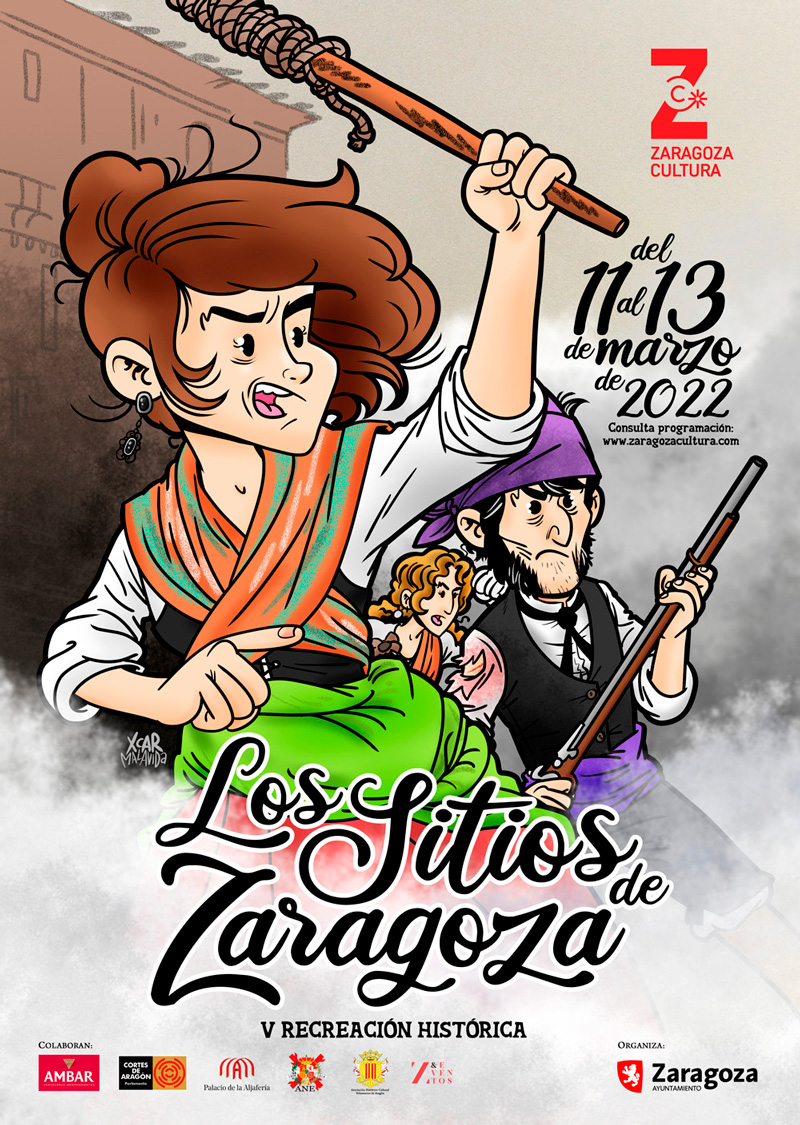
Historical recreation of the sites of Saragossa


The Napoleonic tropes will be discussed, once again, from returning to Saragossa. The city will be the backdrop to the spectacular historical recreation of the sites of Saragossa. The streets will be filled with the uniforms of the War of Independence, the smell of the dust and the sound of the dogs. A worthy spectacle of verse that will record one of the most transcendental moments in the history of our city.
The sites of Saragossa were crucial moments in the War of Spanish Independence and caused resistance from the civil population against the French forces. Thus, they have become a symbol of valor, defense of freedom and of the fighting spirit of the Spanish people who are remembered and remembered with the representation of the key moments of the Saragossa resistance.

What activities are there during the recreation of the sites?
Although specific activities may vary from one year to another, these are some of the activities that are carried out:
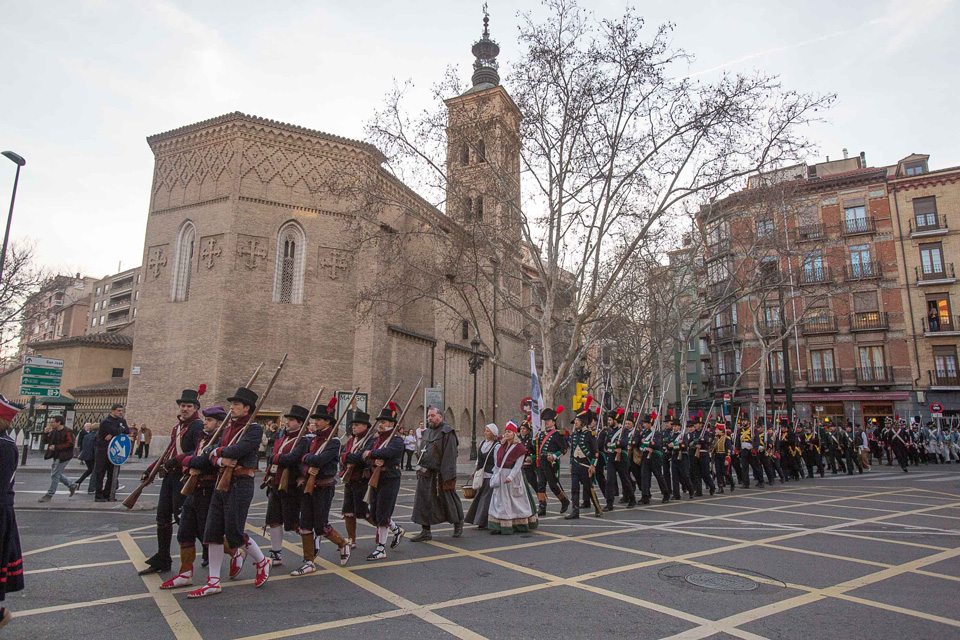
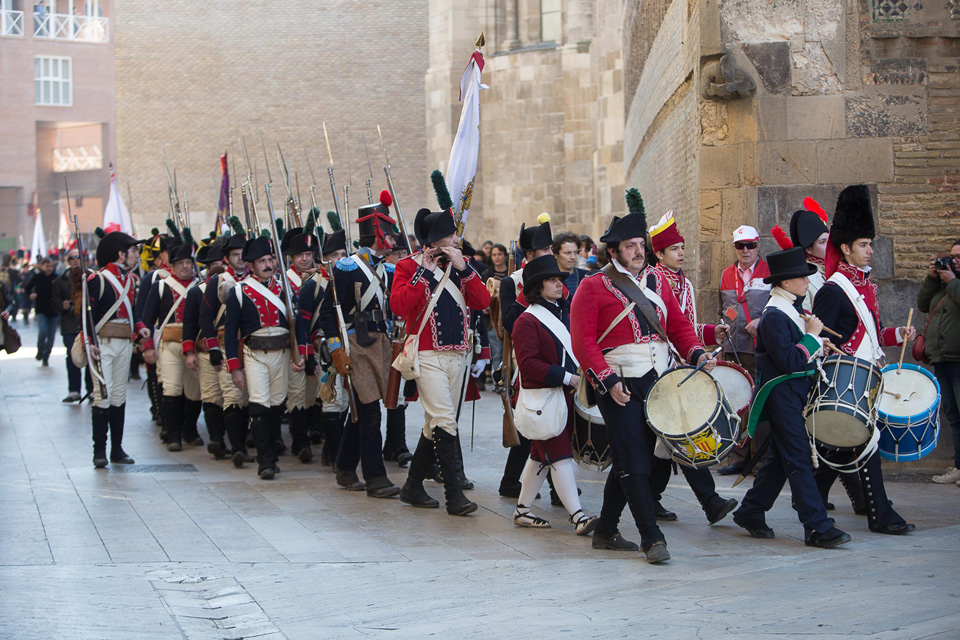
Historical files with people dressed in period costumes, both military and civilian
Historical scenes such as battles, battles and moments of resistance.
Markets and fairs that imitate the style of life of the era, offering products, foods and artesanías that reflect the daily life of that historical period.
Cultural and recreational activities over the history of the sites and their context.
Commemorative acts: Ceremonies and formal acts are carried out to return home to the heroes and victims of the sites.
How do we celebrate recreations of Los Sitios in Saragossa?
In 2009, 2013, 2015, 2018, 2020 and 2022, recreations of the sites in Saragossa were carried out.
Are you taking part in the recreation of Los Sitios?
400 people, belonging to 37 associations, will recreate some of the main moments of the Sites, wearing uniforms, with exact replicas of the trajes of the era, weapons and banners.
For the realization of the recreations of Los Sitios, the Ayuntamiento of Saragossa collaborates with the collaboration of the Asociación Voluntarios de Aragón, and the support of the Asociación Napoleónica Española (ANE). The Asociación Histórico Cultural Voluntarios de Aragón has brought together 400 soldiers from 29 associations from all over Spain (Zaragoza, Gerona, Madrid, Bailén, Valencia, Tarragona, Asturias, etc.) and Europe (France, Holland, Poland and Russia). 4 canons, 100 kilos of dust and various cables. All participants will bring exact replicas of the original uniforms, armaments and equipment, maintained to the minimum detail.

What are the sites of Saragossa?
The sites of Saragossa are the sieges that the city suffered during the Spanish War of Independence (1808-1814) by part of the French forces. These sieges occurred in 1808 and 1809, and are considered episodes detached from the Spanish army against the Napoleonic occupation.
In 1808, the French forces under the command of Napoleón Bonaparte invaded Spain. Napoleon deposed the Spanish king Carlos IV and placed upon him his own brother, José Bonaparte, on the throne of Spain, who defused the discontent and resistance throughout the country.
Resistance councils and groups were formed in different regions to fight against the occupation and defend the independence of Spain, and Saragossa became an important center of resistance.
After the French invasion of Spain in 1808 and the colonization of José Bonaparte as king of Naples, there was an uprising and resistance in all of Spain. In Saragossa, the people rose up against French occupation. On June 15, 1808, the French forces, under the command of General Jean-Antoine Verdier, raided the city and began the siege. The people of Saragossa organized themselves for defence, including regular soldiers, milicianos and armed civilians.
Primer Sitio de Saragossa (1808)
This site took place from June until August 1808. On the 15th of June 1808, the French forces, under the command of General Jean-Antoine Verdier, raided the city and began the siege. The people of Saragossa organized themselves for defence, including regular soldiers, militiamen and armed civilians, offering a fierce defense of the city. The city resisted for more than two months, but finally surrendered on August 15, 1808. The failure of its ministers, the unhealthy conditions and the constant presence of the French forces debilitated the Saragossa defenders.
Second Sitio de Saragossa (1809)
After the Primer Site, the French forces continued their occupation and control over Spain. The second site took place from December 1808 to February 1809. Napoleon ordered a new offensive for sometime in the rebellious regions. The French forces, under the command of Mariscal Lannes, once again settled in Saragossa. Today, the city was defended by the Spanish forces under the command of General José de Palafox.
Having weighed the difficult conditions and the failure of the recursos, the people of Saragossa decided to resist with valour.
Considering the valiant resistance, the difficult conditions and the failure of recursions affected the city. Finally, the Spanish forces were obliged to evacuate the city, which landed in French hands.
Thus, on February 21, 1809, Saragossa returned to the French forces. The leader of the resistance, José de Palafox, and many of the Saragossa defenders were taken prisoner.
How do I access the sites of Saragossa?
The sites of Saragossa, although they resulted in the destruction of the city in the face of the French invading forces, left a lasting legacy of valor and resistance in the historical memory of Spain.


What happened to Tio Jorge?
“El Tío Jorge” was a detached person during the sites of Saragossa. Named Jorge Borrow, he gained the title of “El Tío Jorge” due to his participation in the resistance during these attacks.
Jorge Borrow was a British adventurer, writer and linguist who met in Saragossa during the Sites. At the expense of not having direct ties with the city, he became involved in the fight against the French forces towards the Spanish defenders.
Who was José de Palafox?
José de Palafox y Melci was a Spanish soldier and politician and was a prominent figure in the defense of Saragossa against the French forces during Los Sitios de Saragossa.
Palafox was the captain general of Aragón at this time and assumed an important title in the Saragossa resistance. Despite the difficult situation and the failure of recursions, Palafox and his forces fought tenaciously against the forces of Napoleon.
His leadership and determination inspired the Saragossa population to resist with valor during the sieges. However, given that the situation was becoming unsustainable, Palafox and the Spanish forces were finally obliged to surrender to the superiority of the French forces in the second place of Saragossa.
Who was Agustina de Aragón?
Agustina de Aragón is a historical figure discovered during the sites of Saragossa in 1808-1809
Agustina Zaragoza Domènech, known as Agustina de Aragón, became a symbol of valor and resistance in the fight against the French forces in the city of Saragossa.
Agustina was a young artilleryman who worked in defense of the city. Her most famous moment occurred during the first site of Saragossa in 1808. It is said that after an artilleryman was killed while defending an artillery battery, Agustina returned to her location and continued shooting against the French forces. Her actions inspired others to join the defense, and she became an iconic figure of the Saragossa resistance.
The most commonly known legend about Agustina de Aragón relates to the defense of the Portillo bastion. It is noted that when the French forces were able to penetrate the bastion and were about to take back the Spanish flag, Agustina received the warning and threw herself to the front, maintaining the morale of the defenders high. This valiant action was a symbolic moment of resistance.
Where was Casta Álvarez?
Casta Álvarez was a hero who fought in the canon battle of Puerta Sancho and in the combats of the Arrabal neighborhood.
What does the Plaza de los Sitios in Saragossa symbolize?
The Plaza de los Sitios commemorates the Sitios of Saragossa during the War of Spanish Independence against the French forces in 1808-1809.
In the Plaza de los Sites, there is the “Monument to the Sites” designed by Agustín Querol, which returns home to the heroes and defenders of Saragossa during the sieges. The central sculpture represents the allegorical figure of the city of Saragossa, holding a torch in his hand as he rises above a pedestal.The redoubt of the base of the monument has relieves and sculptures that represent scenes of the historical sites and figures related to this period.

Historical recreation of the sites of Saragossa: Interview with two marine children
The hum of the shots of the cannons and the musketons swept through the alleys of the Pilar of Saragossa late on Saturday when Ricardo, our historian-receptionist of the night shift, explained to us what he had passed: “We are in 1808, and the tropes of the French emperor, Napoleon Bonaparte, waged a battle this late against military ranks and civilian volunteers who defended Saragossa and who achieved the victory of the Coso. Mañana will fly another battle in the Aljafería and the French will be the ones who sing victory. However, not for a long time…”
Some of the soldiers retired to sleep at the military camp in the Plaza de los Sitios. But the generals discovered their battles, and the various uniforms of the Spanish and French (as well as the Polish) rushed bands decided not to rush to the Aragonese circle and took refuge in the hot streets of the Hotel Sauce, just a dozen meters away. Still leaving the smell of gunpowder through the hotel corridors, the Spanish marines Jorge Garbayo (46 years old, San Sebastián) and Irene Cortés (32 years old, Pamplona), recount the ins and outs and curiosities of the Historical Reenactment of Saragossa.
“It was the mentality of the people, which never ceased to be subjugated, which was due to Napoleon”
What happened to the mission in the two battles that took place in this Historical Recreation?
JORGE and IRENE: We belong to marine infantry, who are the ones who deploy and disguise themselves in the battle field to destabilize the enemy. Let’s block the ministers, let’s locate and eliminate enemy officials, let’s cut off communication between them…
What happens to a marine infantry in the middle of Saragossa?
Spain had the best naval infantry in the world, but in the battle of Trafalgar we lost the majority of our ships. This caused us to test our military capabilities in other lands within.
What is your job when you are not facing the Napoleonic army?
JORGE: I have been a customer engineer at Telefónica since ten years ago.
IRENE: I’m an electrician.
How were the marine infantry soldiers of the Spanish army of the 19th century converted?
IRENE: My father was a recreator; I liked it, and I’ve grown up with it for three years.
JORGE: I cuñado me enganchó y yo ya llevo ocho. In our rows we have doctors, teachers, engineers… We belong to Blas de Lezo, one of the groups under the umbrella of the Spanish Napoleonic Association which brings together rereaders from Guipúzcoa and Navarra.
What’s the best thing to do for you to recreate?
JORGE: I’m very interested in the story. People who simply thank you and come to try don’t usually last very long because it’s a very sacrificed passion. We were covered in rain or snow for many consecutive days wrapped in the uncomfortable uniforms that have taken us years to prepare and complete to make it as realistic as possible and, when we finish playing, we also need a large amount of cleanliness of the material and of the weapons to protect us which does not oxide us.
How long will a war be recreated?
I’m sure we made an apology for Belicism, and it’s exactly the opposite: I am an object of conscience. Let us not celebrate victories or defeats until we show ourselves what a war or battle entails for a population, which is the main victim. Sometimes in the recreations even civilians who die appear. It is a lesson that does not appear in text books and that in every case commemorates the true heroes of the battle, like those who lost, but resisted the unimaginable or those who died, protecting those who retreated.
What paper is the population right now in this battle?
Su rol was vital for the war. Upon conquering Spain, Napoleon sent the Spanish military elite to the French front in Denmark to avoid revolts by the army, but then the civilians began to rise here and there, making the war interminable and causing an inconceivable disaster to Napoleon’s troops. Many were converted into professionals. It was this civil mentality, which did not exist in other places, which led to his having to thank Napoleon.
We know the important paper in this war of some of the Aragonese women, such as Doña Casta or Agustina de Aragón. Did they tell the man the rifle and go to war more than the women we believe in?
IRENE: The story is written by the nobles, but also by the men, so that many more women are playing in the story of the ones we know. Among the warriors who joined the professionals there were also women who lost it all and decided to fight.
How have men treated you like this these days?
IRENE: Much love. It’s better for them. Yes no, I make them firm.
In the battle field they arrived looking for 200 Spanish soldiers s and more than 200 soldiers of the French band, integrated by Polish, French and Dutch recruits. How do you coordinate the stage challenge of 400 participants?
First we read the program that we are going to do every day. Prior to each battle, a meeting is celebrated of officials who are aware of what will happen: what happens to each one, from where they have to enter, how much time it takes to grab each bandit, those who go to get killed in each load… We use the basics, but sometimes we complete the plan, and we can improvise. However, you can end up missing because the quantity of dust they give you allows a certain number of shots, so that, one way or another, the end of the fight is always what happens.
They shared their stay at the Hotel Sauce with French and Polish people. Did you help this guy to enter the war with the enemy and make new friends?
Nowadays we have a bit of an idiomatic barrier with Polish people, but throughout the time we also have friends from French, English, etc… because we often meet one another at hotels in Europe during holidays.
What is the rarest thing that you have ever visited a hotel?
They are the same people staying in the hotel who usually have the feeling that something rare happens when we come. The most amusing thing is to see the dear old neighbor who is half asleep waiting for the elevator at the point of the morning, and when the doors open we will appear.
Is this an absurd object that cannot be done on your equipment?
The absurd is our equipment in itself. On one side we took a mochila with a pajama and a head of men and, on the other, a full van until we arrive with material for the battle which requires tens of trips from there to the hotel.
What did you think of the organization of the Historical Recreation of Saragossa?
Muy buena. They have kept the army – something that doesn’t happen in other places – to play out different battles: urban combats, fortress combats… We all enjoy more of the world, and we allow us to change the strategic description and our roles in the country… Also, every time year I love one and pierden others, and that is much more true to reality.


